11 May 2026
Fuel Levy Update – May 11th
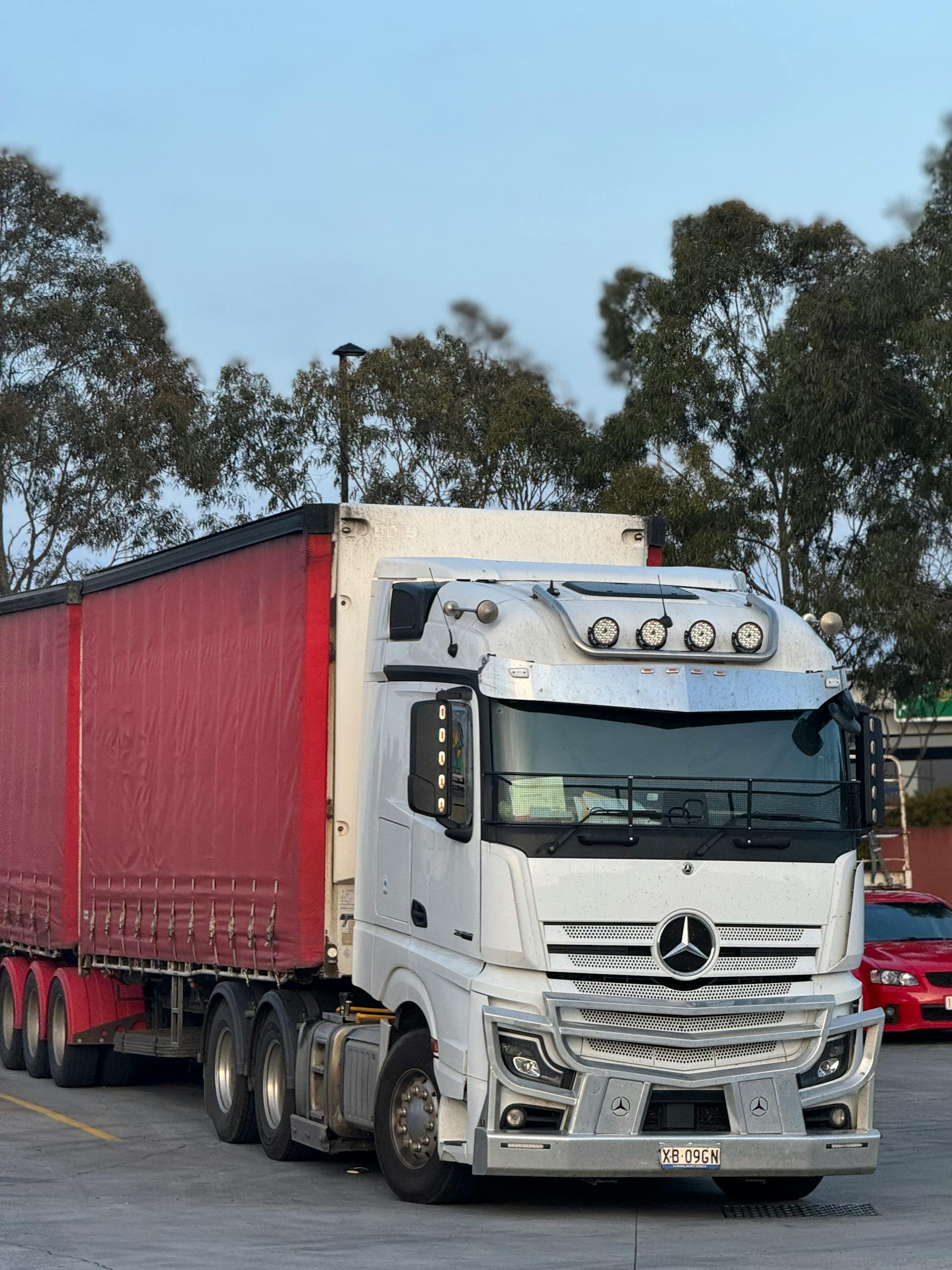
The unprecedented sudden rise in fuel costs in Australia, especially diesel, has impacted freight significantly. There are high value, high margin goods where the freight costs can be easily absorbed without unduly impacting profitability. In the agricultural ingredient supply chain, margins are typically very low and the distances often travelled are significant. The use of freight inclusive (FIS) prices as the dominant pricing approach means that either price lists are routinely updated or a separate charge to cover the extraordinary rise in the fuel levy is taken. On some goods the additional charge to other states significantly exceeds the margin on the goods.
TFB Trading has chosen to separate out the recovery of this additional freight charge for two reasons:
- To avoid sending out a new price list each week and keep our monthly cycle
- To avoid locking in higher prices if we get price relief
11 May update — consistency, not change: All TFB routes are unchanged from last fortnight. This is the second consecutive review where eastern states have held flat (since 27 Apr) and the first where Perth has stabilised after its 4 May lift. The market has moved from the rapid easing phase into a consolidation phase — international diesel benchmarks have now logged three consecutive weeks of small declines (~1% each), and Australian retail diesel is down 25% from its peak. We expect this consolidation to continue through May barring a fresh disruption.
What is happening with diesel prices
The picture has stabilised materially since our last update. The national average diesel price peaked at ~310¢/L on 13 April, eased to 259¢/L by 27 April after the federal excise cut and HVIC zero rating flowed through, and has now settled in the low 260s through 4 and 11 May. Three consecutive weekly ACCC reports show international gasoil down ~1% per week — small, consistent declines rather than the sharp moves of March and April.
PM&C’s latest update shows Australian retail diesel prices are now down 25% from peak, and petrol down 30%, across the five largest cities. BP’s diesel terminal gate prices on 8 May were tracking ~220¢/L in Sydney and Brisbane, with Perth at ~221¢/L — Perth has now converged with the eastern states after its late-April lag.
The chart below shows the AIP five-city average diesel price across the cycle from end of February to today.
The five-city average has flat-lined at ~262¢/L over the past two weeks — confirming the stabilisation. Gasoil down 1% w/w to 6 May, gasoil down 1% w/w to 29 April, gasoil down 18% w/w to 22 April. The big easing has already happened; from here we are in a slow grind sideways unless something disrupts the picture.
Freight Cost by Destination — Levy % Trend
Brisbane, Sydney and Adelaide share the same carrier levy percentage, so they are grouped below. Perth and Melbourne each follow a different schedule. The line charts now track the levy rate across ten fortnightly periods since end of February.
The 11 May review brought no changes across any TFB route. This is the second consecutive review where Brisbane, Sydney, Adelaide and Melbourne have held flat, and the first where Perth has stabilised after its 4 May lift caught up with the eastern states. The carrier schedules have converged on the current diesel price plateau.
Bean Growers Australia: Fuel Levy Surcharge
For comparison, Bean Growers Australia has updated their extraordinary fuel levy surcharge applied to freight-inclusive pricing on deliveries from Kingaroy. BGA’s rates have moved down materially again this week — approximately 19–20% lower across all four destinations versus 4 May, reflecting their continued recalibration to the easing diesel benchmark. BGA’s surcharge structure is responding faster to wholesale price moves than the TFB carriers’ fortnightly review schedule, which is why BGA changes more frequently and in larger steps. The surcharge component is shown plus GST.
Tanker Traffic, Refining Capacity & the Medium-term Outlook
The current fortnightly consistency in domestic levy rates reflects the underlying stabilisation in international benchmarks — but freight pricing remains exposed to the structural picture, which has not fundamentally changed. The volume of fuel arriving at Australian ports is up modestly this week, but the supply equation continues to operate with very little slack in it.
🚢 The Australian fuel supply equation Structural Risk
Australia imports roughly 90% of its refined petroleum, entirely on foreign-owned and foreign-crewed vessels. Domestic refining capacity has been cut to two operating facilities — Ampol’s Lytton plant in Brisbane and Viva Energy’s Geelong refinery — together supplying less than 20% of national demand. Geelong’s recovery has continued to track to plan and the official position from PM&C remains that domestic refining is continuing despite some disruptions, with output expected to reach >90% of capacity in the coming weeks.
The latest PM&C taskforce update shows forward orders for the next four weeks have lifted from 4.0bn litres to 4.5bn litres — a positive sign that arrivals are catching up after the late-April lull. But the structural composition of supply has not changed: Singapore (~55% of petrol, ~15% of diesel), South Korea and Malaysia remain Australia’s primary sources, with US and Argentine cargoes filling earlier gaps. Iran declared the Strait of Hormuz open on 18 April, but Reuters noted at the time that “opening Hormuz is the easy part — restoring oil flows isn’t”; ship traffic remains well below pre-war levels.
This matters for freight rates because Asian refineries are configured to process Middle Eastern crude. When that crude flow tightened, regional refining margins tightened with it. The current ~262¢/L domestic diesel price reflects the ~60¢/L improvement in international gasoil since 31 March, but the structural premium over pre-conflict (~180¢/L end-of-February) is still ~80¢/L. We are sitting on the new floor, not returning to the old one.
In practical terms for our customers: this week’s consistency is a welcome change from the volatility of March and April, but budgets and contract pricing assumptions for the remainder of FY26 should still not assume a return to pre-February freight levels. The 30 June excise cliff is now the largest specific risk on the horizon. We will continue to keep the levy surcharge separated transparently rather than rolling it into base pricing — for the reasons set out at the top of this post.
Sources & Weekly Data Points
The levies are reviewed fortnightly. We’ll update this post if there’s a material change before the next scheduled review.
What’s driving rates this week — referenced sources:
- International gasoil down 1% w/w to 6 May (third consecutive ~1% weekly decline) — small, consistent moves rather than the sharp swings of March/April (PM&C, citing ACCC weekly report 8 May 2026).
- Australian retail diesel now down 25% from peak across the five largest cities; petrol down 30% (PM&C, data as at 6 May).
- Terminal gate diesel on 8 May: ~220¢/L Sydney/Brisbane, ~221¢/L Perth — convergence between east coast and Perth (BP Terminal Gate Pricing; AIP TGP data updated 8 May 2026).
- Forward orders for the next 4 weeks have lifted from 4.0bn to 4.5bn litres — arrivals catching up after late-April lull (PM&C, data as at 5 May).
- National reserves: 33 days diesel (steady), Australia remains at Level 2 of the National Fuel Security Plan as confirmed by National Cabinet (DITRDCSA).
- Strait of Hormuz declared open by Iran 18 April, but ship traffic remains well below pre-war levels — Reuters: “opening Hormuz is the easy part, restoring oil flows isn’t” (ACCC weekly report 24 April 2026).
- European summer demand (June–August) flagged by HVIA as next risk to Asian refining margins and Australian supply (HVIA Fuel Security Update, 1 May 2026).
- Government messaging remains that “prices will remain high for a significant period of time” — HVIA reads as well into 2027 (HVIA briefing).
TFB Trading freight costs are per pallet, rounded to the nearest whole dollar. Fuel levy % is applied to the base freight rate and reviewed fortnightly. Bean Growers Australia figures represent the extraordinary fuel levy surcharge on freight-inclusive pricing, plus GST, as published by BGA. Contact TFB Trading for your specific account rates.